 Health Voyage India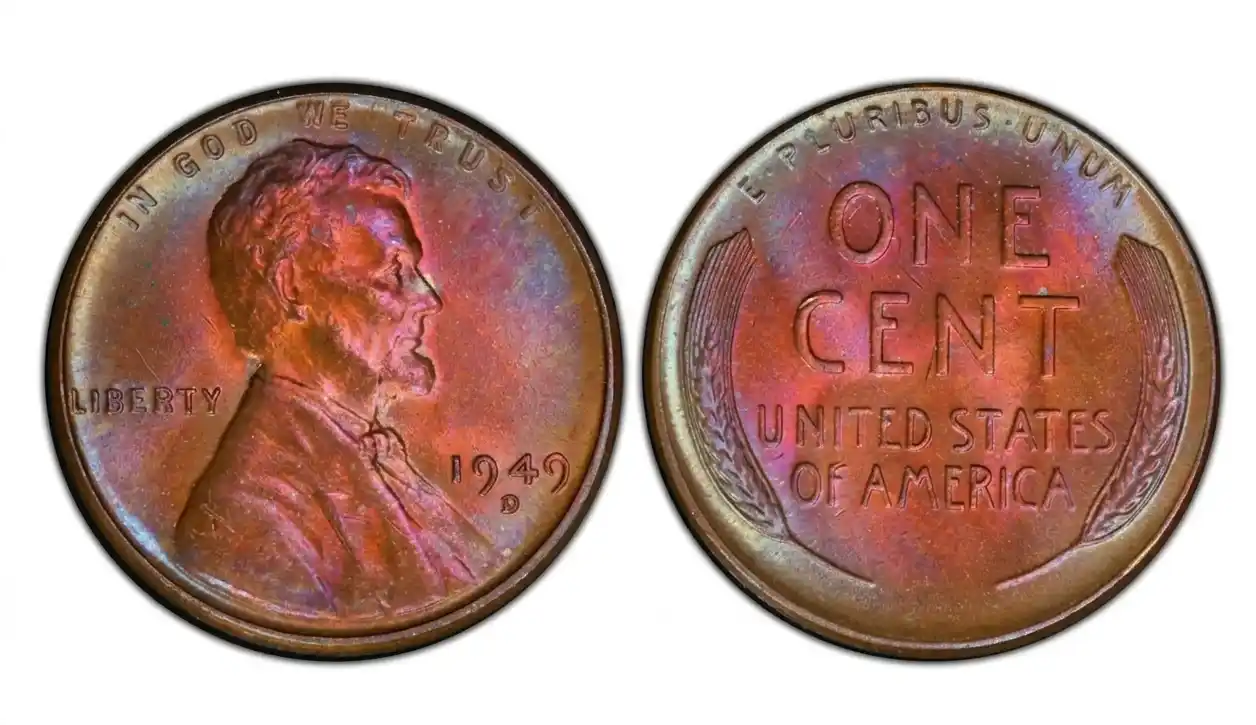
Subtle differences in color and strike reshape how collectors value each specimen.
The 1949 Wheat Penny surface condition dictates the final market position for every individual coin.
Finding coins in general circulation rarely leads to high numismatic worth.
Characteristic | Metric Value |
Metal | Copper 95%, tin and zinc 5% |
Mass | 3.11 grams |
Diameter | 19.05 millimeters |
Edge | Plain |
Designer | Victor David Brenner |
Mint Location Influence on Rarity
Three production centers operated during 1949.
Output volume for each facility correlates directly with survival rates in high grades.
Locating the mint mark occurs under the date on the obverse side.
Philadelphia No Mint Mark
Enterprise units totaled 217,825,000 pieces.
Missing letters under the date confirm origin from this city.
Variety status ranks as the most common in the series.
Worth in circulated condition stays near face value.
Price changes for MS66 Red:
2024 price: $62.00 per unit.
2025 price: $68.00 per unit.
2026 price: $74.00 per unit.
Denver Mint Mark D
Mintage figures reached 153,132,000 pieces.
Letter D indicates origin from the Colorado facility.
Striking quality in Denver often surpassed other branches.
Locating specimens with full luster becomes easier for this position.
Growth dynamics for MS67 Red worth:
2024 worth: $360.00 per unit.
2025 worth: $395.00 per unit.
2026 worth: $430.00 per unit.
San Francisco Mint Mark S
Production plans included 64,290,000 units.
Marking S traditionally attracts attention due to lower mintage.
Coins from this mint often demonstrate deep red color.
Pricing for MS67 Red:
2024 price: $610.00 per unit.
2025 price: $655.00 per unit.
2026 price: $710.00 per unit.
Color Preservation Categories
Copper coins face classification based on surface oxidation levels.
Professional evaluation services utilize three specific letter codes.
Color gradation scales directly determine the market price.
Category Brown BN
Surfaces oxidized completely under environmental influence.
Red color remains on less than 5% of the area.
Such coins possess brown or dark chocolate shades.
Value for common BN grades ranges from $0.10 to $2.00.
Category Red Brown RB
Metal retained between 5% and 95% of original orange luster.
Combination patterns of brown areas and bright zones appear.
Average price ranges make them accessible for the mass market.
Worth for MS65 RB:
Philadelphia → $12.00
Denver → $10.00
San Francisco → $18.00
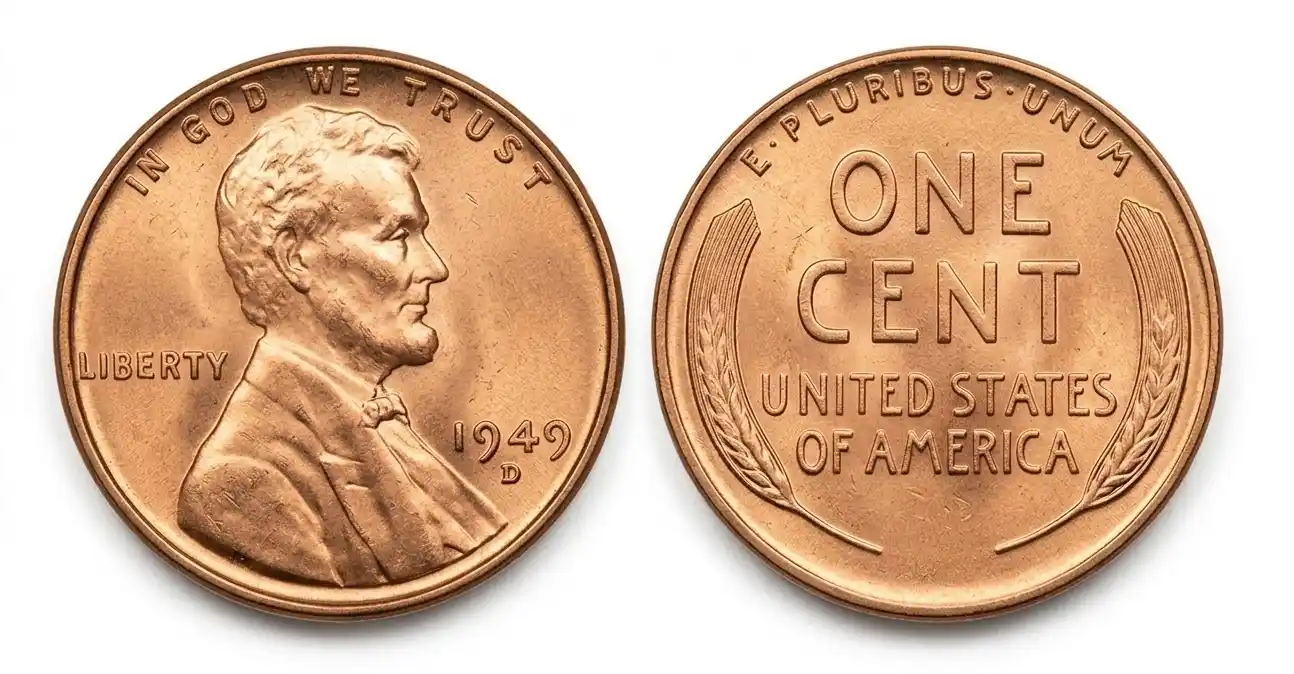
Category Red RD
Status requires possessing over 95% original mint luster.
Corrosion spots or darkening strip the coin of this designation.
Only RD category specimens claim record sums during sales.
Price increases when moving from RB to RD:
Grade MS66 RB → $22.00
Grade MS66 RD → $65.00
Value difference exceeds 190%.
Production Anomalies and Errors
Manufacturing defects create supply shortages.
Every identified defect requires expert confirmation.
Error presence on high-grade coins multiplies worth significantly.
Double Die Obverse
Design element doubling occurs during the hubbing stage.
Date digits show minor shifts on 1949 issues.
Signs manifest as thickened lettering on inscriptions.
Clear specimens remain absent making minor finds valuable.
Confirmed date doubling value → $45.00.
Off-Center Strike
Planchet misalignment results in partial image loss.
Evaluation depends on the%age of remaining information.
Readable dates remain mandatory for high market price.
Price statistics by displacement degree:
10% shift → $28.00
25% shift → $75.00
50% shift → $165.00
50% with mint mark → $290.00
Lamination Error
Surface metal peeling occurs due to impurities in the copper alloy.
Cracks on the surface expose internal planchet structures.
Damage size directly influences the final price.
Small slivers hold little market worth.
Large peelings covering the portrait cost up to $40.00.
Die Crack BIE
Specific errors appear in the word LIBERTY.
Vertical metal bumps emerge between letters B and I.
Steel die failure in narrow spots causes this.
Variety collectors maintain a dedicated group for this error.
Worth for a specimen in good condition equals $12.00.
Auction Records and Statistics
Major platform sales record maximum demand levels.
Archival data orientation helps identify the profitability ceiling.
Certified coins always lead in reporting.
Record for 1949 Philadelphia
Grade: MS67+ Red
Sale price: $2,115.00
Transaction period: 2019
Record for 1949-D Denver
Grade: MS67+ Red
Sale price: $7,050.00
Transaction period: 2018
Record for 1949-S San Francisco
Grade: MS67 Red
Sale price: $4,313.00
Transaction period: 2015
Condition Evaluation Using the Sheldon Scale
Professional numismatists utilize a 70-point system with Coin ID Scanner.
Price gaps between points 66 and 67 remain the most significant.
Every microscopic contact mark lowers the evaluation.
Grades for Circulated Coins
Good G04 → Heavy wear with outlines barely visible
Fine F12 → Sharp inscriptions showing flat portrait details
Extremely Fine XF45 → Light friction traces on hair and wheat stalks
Mint State Grades
MS63 → Noticeable scratches with dull luster
MS65 → Attractive appearance featuring singular defects
MS67 → Perfect condition representing exceptional rarity
Market Environment Change Factors
Price dynamics depend on the total volume of certified samples.
Annual population increases for high grades occur due to new discoveries.
Segment price corrections follow these supply changes.
PCGS population changes for MS67 Red:
Mint Type | Total 2020 | Total 2026 | Supply Growth%age |
Philadelphia | 114 | 128 | +12% |
Denver | 89 | 94 | +5% |
San Francisco | 215 | 242 | +11% |
Slow growth rates in Denver explain higher prices for these specimens.
Professional Certification Process
Service usage through NGC or PCGS guarantees authenticity.
Coins enter airtight capsules excluding air contact.
Evaluation involves expert groups using a coin app.
Evaluation Steps
Selecting high-quality specimens.
Paying service fees.
Transporting in specialized containers.
Waiting for expert results.
Receiving identification numbers in databases.
Preservation and Investment Protection
Copper remains extremely sensitive to humidity and chemicals.
Improper storage destroys numismatic value within months.
Restoring original luster after cleaning remains impossible.
Handling Rules
Avoiding skin contact
Using acid-free inserts
Maintaining humidity below 30%
Rejecting household cleaning agents
Cleaning coins with abrasives drops worth by 90% instantly.
Such specimens receive Improperly Cleaned labels lacking numeric grades.